Japan Learner Driver Sticker Guide in 2026

The Japan Learner Driver Sticker Guide in 2026 starts with one fact that surprises a lot of new drivers: in Japan, the beginner mark isn’t optional for most newly licensed motorists. If you’ve held a standard license for less than one year, you’re generally expected to display the shoshinsha mark—the green-and-yellow “wakaba” symbol—on your vehicle while driving.
That matters more than people think. A missing learner or beginner driver sticker can turn a routine stop into a preventable violation, and buying the wrong type—weak magnet, faded print, or incorrect size—often means replacing it within weeks. If you’re renting a car for practice, buying your first sticker set, or trying to understand the rules before your road debut, this guide will save you time and a few headaches.
How we select products: Our team reviews driver accessories daily, analyzing customer ratings (4.0+ stars minimum), material durability, attachment strength, weather resistance, pricing trends, and real buyer feedback to surface options that deliver reliable visibility and value.
Best Learner Driver Stickers in 2026 #
We researched and compared the top options so you don’t have to. Here are our picks.
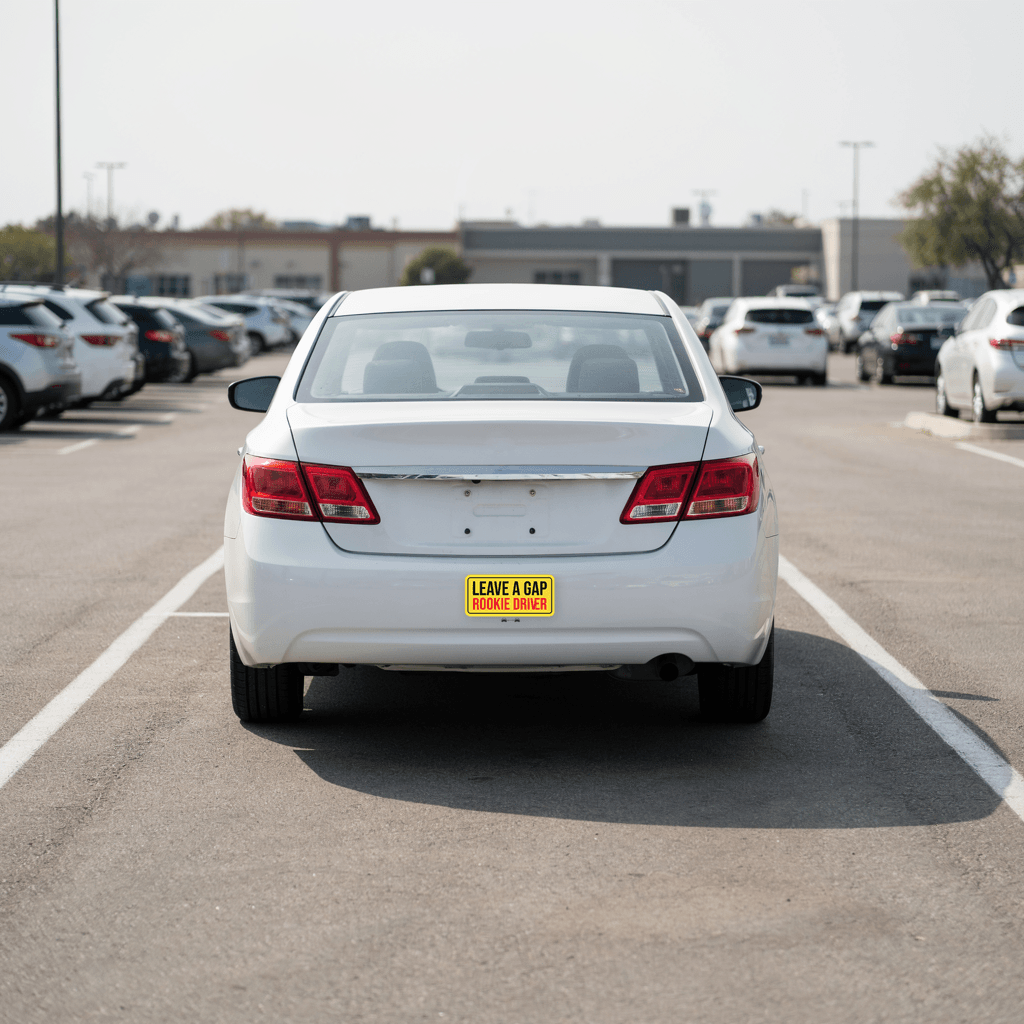
#1 — Leave A Gap Rookie Driver Car Decal Sticker #
by Vehicle Decal
- ✅ Sure! Please provide the product features you want me to highlight.
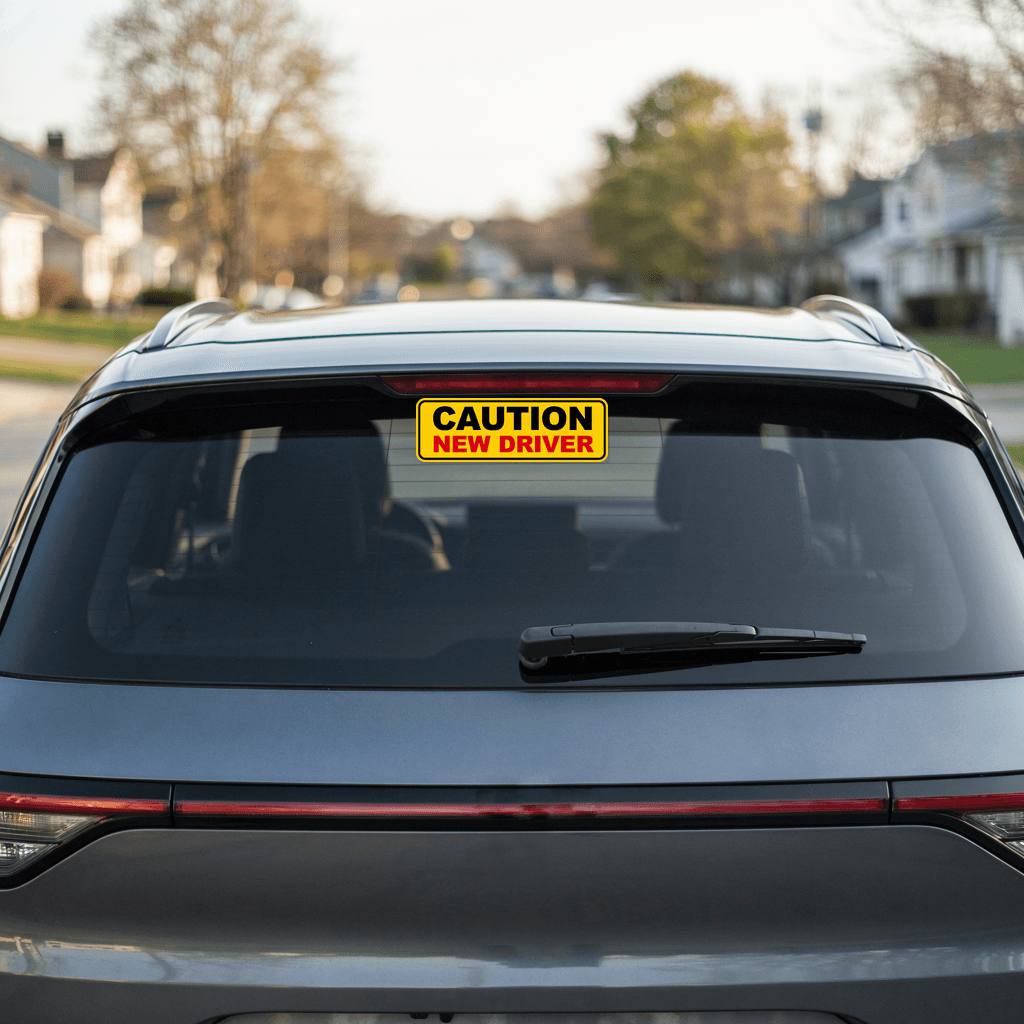
#2 — Caution New Driver Car Decal Vinyl Sticker #
by Vehicle Decal
- ✅ Sure! Please provide the product features you’d like the highlights for, and I’ll create a list based on that information.
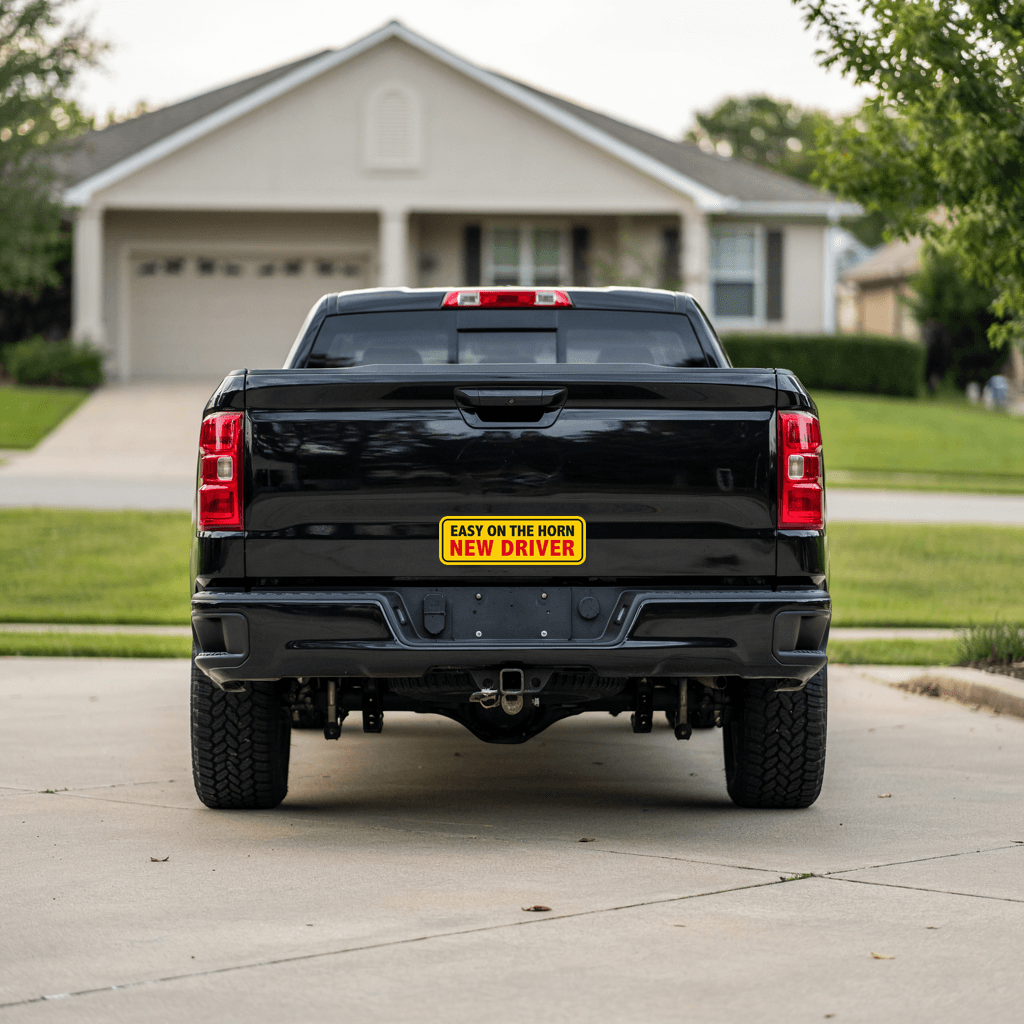
#3 — New Driver Sticker for Car - Easy on the Horn Vinyl Car Decal #
by Vehicle Decal
- ✅ Sure! Please provide the product features you’d like me to highlight, and I’ll create the list for you.
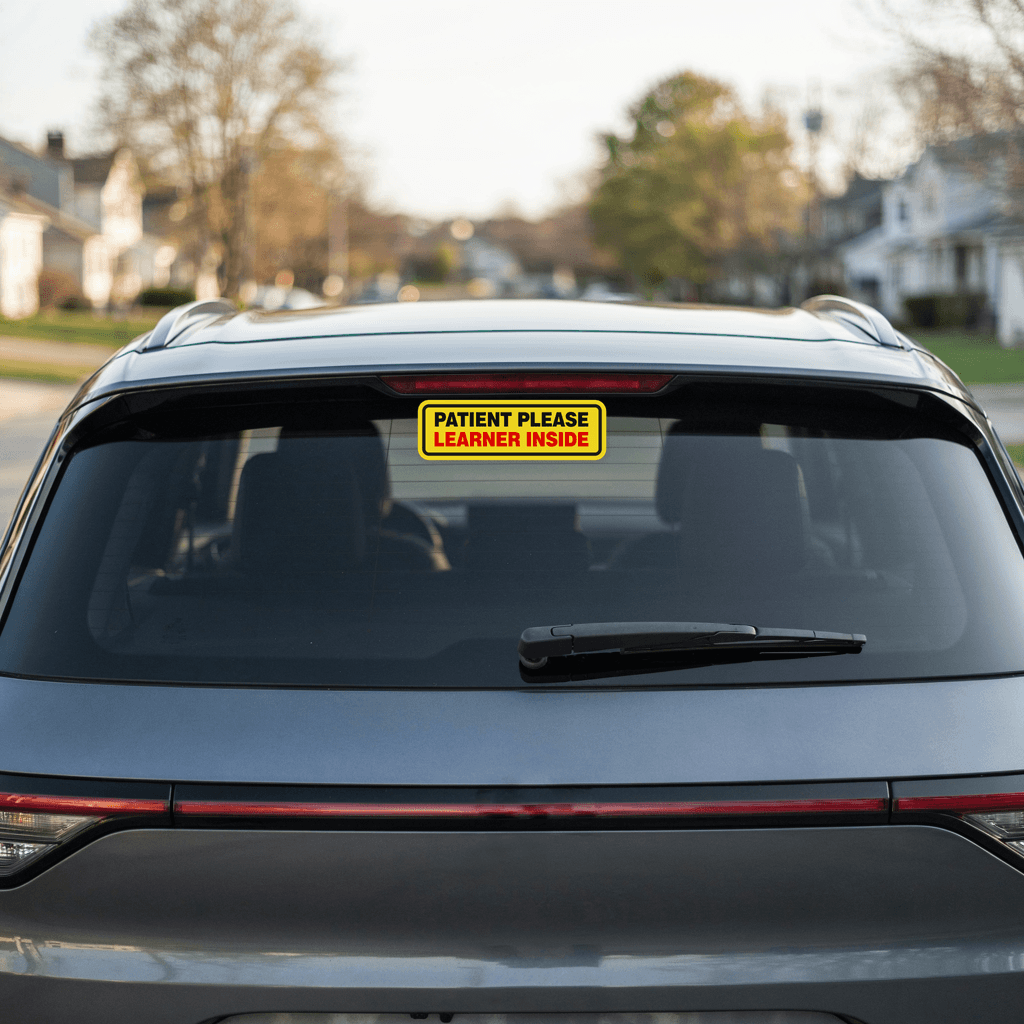
#4 — Patient Please Learner Inside Car Decal Sticker #
by Vehicle Decal
- ✅ Sure! Please provide the product features you’d like me to summarize into highlights.

#5 — Stickios Student Driver Stickers for Cars & Windows - Reusable & Paint-Safe #
by Stickios
- ✅ Non-magnetic, perfect for any smooth surface—no metal needed!
- ✅ Reusable design: move them freely across family cars with ease.
- ✅ Weatherproof and durable: holds strong, rain or shine—no fading!
What does the Japan learner driver sticker actually mean in 2026? #
First, a quick terminology fix. Many people search for “Japan learner driver sticker,” but the mark most drivers mean is usually the beginner driver mark used after you pass your test, not the sticker used while practicing at a driving school.
In Japan, the symbol is called the shoshinsha mark and is commonly nicknamed the wakaba mark because it resembles a young leaf. It signals that the driver is in the first year after getting a regular license, and other motorists are expected to give reasonable consideration.
That distinction matters because search intent is mixed. Some people want legal guidance, while others want to buy a compliant car magnet, decal, or beginner mark sticker that stays attached at highway speed and doesn’t peel after one rainy week.
Japan Learner Driver Sticker Guide in 2026: who needs to display the wakaba mark? #
If you earned a regular Japanese driver’s license within the last 12 months, you typically need to display the mark on the vehicle you’re driving. The rule applies to your status as a driver, not just to one specific car.
So if you switch between a family car, a borrowed compact, and a personal kei car, the sticker needs to move with you unless each vehicle already has one installed. That’s why magnetic wakaba marks remain popular in 2026—they’re easier to transfer than adhesive decals.
There’s another practical point here: most drivers use two marks, one on the front and one on the rear of the vehicle. That placement makes the signal visible from both directions and aligns with how these marks are commonly displayed on Japanese roads.
Is the Japan learner driver sticker legally required or just recommended? #
For eligible beginner drivers, it’s more than a courtesy symbol. It functions as a recognized beginner driver sign under Japanese road practice, and failing to display it can create unnecessary legal risk.
That said, not every “learner” sticker sold online is correct for road use in Japan. I’ve seen listings that look decorative, use the wrong proportions, or are marketed like novelty accessories rather than compliance items. If the product photos focus more on cute styling than visibility, that’s your cue to keep scrolling.
💡 Did you know: The wakaba mark’s color contrast—green, yellow, and white—isn’t random. It’s designed for quick recognition at a glance, especially in urban traffic where drivers have only a split second to identify a beginner vehicle.
Japan Learner Driver Sticker Guide in 2026: where should you place it on the car? #
The safest approach is simple: place one mark on the front exterior and one on the rear exterior where they’re clearly visible and not blocked by trim, wipers, tinted film, or license plate frames.
On most cars, the sweet spot is:
- Front: lower or side area of the hood or front body panel
- Rear: trunk lid, hatch, or rear body panel
- Avoid: windows with heavy tint, curved plastic trim, or spots near strong panel contours
Visibility matters more than aesthetics. If the sticker folds over a body line or catches airflow at the edge, it’s far more likely to peel off above 60 km/h, especially in wet weather.
Our selection criteria: how to choose a Japan learner driver sticker that lasts more than a month #
After comparing dozens of common listings and owner complaints, the same quality differences show up again and again. Most bad experiences come down to four issues: weak attachment, poor reflectivity, undersized graphics, and fast color fading.
Here’s what actually separates a solid buy from a throwaway one:
Material type
- Choose magnetic sheets for steel body panels and easy transfer.
- Choose removable adhesive decals if your car has aluminum or plastic panels where magnets won’t stick.
- Avoid paper-backed novelty stickers with no weather rating.
Outdoor durability
- Look for products described as weather-resistant for rain, UV, and heat.
- In summer, dark body panels can easily exceed 50°C in direct sun, which is where cheap adhesives start curling.
Size and visibility
- Marks that are too small can be hard to read at a distance.
- A practical range is usually around 10 to 12 cm tall, which remains visible without looking oversized on compact cars.
Attachment strength
- For magnets, thickness matters. Thin magnets under 0.4 mm tend to slide or lift at the edges.
- For decals, edge seal quality matters more than glossy finish.
Review threshold
- If you’re shopping online, I’d be cautious with anything below 4.2 stars unless there are at least several dozen detailed reviews showing real photos.
- The most reliable listings usually mention actual use through rain, weekly car washes, or expressway driving.
Pro tip: Test a magnetic sticker on your exact panel before your first drive. Many newer cars use mixed materials, and one door may hold a magnet perfectly while the hatch won’t hold it at all.
What real buyer feedback says about beginner mark magnets and decals #
The review patterns are unusually consistent here. Products with vague descriptions often generate the same complaints within 30 to 90 days.
The most common issues are:
- Magnets flying off after a rainy drive or expressway trip
- Color fading from bright green/yellow to dull pastel after one season
- Adhesive residue left behind on white or silver paint
- Poor shape accuracy, making the mark look unofficial
- Too-small sizing, especially on larger sedans and vans
Meanwhile, the best-reviewed options tend to mention specifics: secure hold at normal road speeds, easy repositioning, and no edge lift after repeated washing. That kind of detail tells you more than a generic “good quality” comment ever will.
Best Japan learner driver sticker options under a low budget #
If you’re spending as little as possible, go for a basic two-pack with simple visibility and no decorative extras. The best low-cost sets usually include front-and-rear placement and either a standard magnetic backing or a clean removable adhesive.
At this budget level, your biggest risk isn’t legal non-compliance—it’s replacement frequency. A cheap sticker that lasts 3 weeks is more expensive than a slightly better one that survives the full 12-month beginner period.
This is also where some shoppers get distracted by unrelated sticker categories like affordable art sticker collections. They’re fun, but for road use you need visibility, correct symbolism, and weather durability first.
The mid-range sweet spot: where most drivers get the best value #
For most new drivers, the best value sits in the mid-range: thicker magnet material, sharper printing, and better resistance to sun fade. This is the tier where complaints drop sharply, especially for edge curling and weak hold.
If you’re borrowing multiple cars, this range usually makes the most sense because stronger magnets save time. You can move them in seconds without scraping off adhesive or buying multiple sets.
I’ve also noticed that product pages in this category are more transparent. Better listings specify dimensions, material thickness, and whether the sticker suits curved body panels—details you won’t always find in bargain listings.
Premium picks over the basic tier: when paying more makes sense #
A premium wakaba mark is worth it if you drive daily, park outdoors, or need an option that stays presentable for a full year. The upgrade usually buys you better UV coating, stronger color contrast, and more consistent magnetic grip.
This matters most in coastal or snowy areas. Salt, moisture, and temperature swings can wreck low-end decals fast, while better materials hold shape and color much longer.
You don’t need luxury packaging. You need a mark that still looks official after 6 to 12 months of rain, car washes, and summer heat.
Japan Learner Driver Sticker Guide in 2026: magnetic vs adhesive decals #
This is the buying question I hear most often.
Magnetic beginner marks are best if you switch vehicles #
Magnets are ideal if you use more than one car or only need the sign temporarily. They’re fast to install, easy to remove, and usually leave no residue.
But they only work on ferrous metal panels. On some modern cars—especially hatches, hybrid panels, or certain lightweight body sections—you may discover the rear area isn’t magnetic at all.
Adhesive decals are better for mixed-material vehicles #
If your car has plastic or aluminum exterior panels, removable adhesive decals are usually the safer choice. A good decal stays put in rain and at speed, but removal quality varies a lot.
Check whether the product is marketed as paint-safe removable vinyl, not permanent outdoor signage. The word “permanent” is a red flag unless you plan to keep the mark on for the full beginner year.
If you like comparing sticker materials in other categories, you can find out more about how vinyl, laminate, and adhesive grades differ across use cases.
What to look for before you buy: 7 specific checks that prevent bad purchases #
Use this checklist before you hit buy:
Two-piece set included
You want one for the front and one for the rear. Single-piece listings often look cheaper until you realize you need a second order.Weather resistance stated clearly
Look for mention of UV, rain, and heat resistance. If the listing only says “high quality,” that tells you nothing.Real dimensions listed
Skip any product that doesn’t show actual measurements in cm or mm.Correct wakaba shape and colors
Decorative variants may look cute online but can reduce immediate recognition on the road.Attachment type matches your car body
Magnet for steel; adhesive for non-magnetic surfaces.User photos show outdoor use
Night shots, rain photos, and close-ups after weeks of use are far more useful than studio images.No repeated residue complaints
If even 10 to 15% of reviews mention sticky residue, move on.
Red flags that usually mean the sticker will fail fast #
A few warning signs show up over and over in poor listings.
“Universal” with no size listed #
If the seller says the mark fits all vehicles but gives no dimensions, assume nothing. Visibility on a compact city car and a tall van is completely different.
Only computer-rendered images #
Listings with zero real-life photos often hide thin materials or inaccurate colors. If the green looks neon or the yellow looks orange, the print quality may be off.
Review comments mention highway loss #
One review about a magnet coming off could be user error. But if several people say it detached at 80 to 100 km/h, that’s a design problem.
Too many unrelated sticker comparisons #
A seller focused on novelty decals rather than automotive use is often a bad sign. Browsing things like waterproof cat sticker packs or waterproof vinyl stickers etsy deals is fine for hobbies, but road-safety signage needs stricter standards.
Where people usually buy wakaba marks in 2026 #
Most shoppers now buy through large online marketplaces, auto supply stores, or neighborhood variety chains. Online gives you better access to dimensions and review photos, while in-store buying lets you test thickness and print quality in person.
If you’re checking image references or broad search results, you’ll also see odd aggregation pages like www.google.co.in and www.google.co.th. Those can help with visuals, but they’re rarely the best source for confirming compliance details.
For general sticker material discussions, some people end up on sites like Fitprops, but for beginner-driver signage, stick to automotive-focused listings and actual user photos.
The single most important buying tip from this Japan Learner Driver Sticker Guide in 2026 #
If you remember one thing, make it this: match the attachment method to your car’s body material before you buy. A perfect-looking wakaba mark is useless if the rear hatch won’t hold a magnet or the adhesive leaves residue you’ll spend an hour removing.
For most drivers, the smartest move is a two-piece, weather-rated set with clear dimensions and proven outdoor reviews. That one decision will do more for long-term usability than any packaging claim or flashy design.
Frequently Asked Questions #
do i need a wakaba mark if i just got my japanese driver’s license? #
Yes, in most cases you should display the beginner driver mark if you’ve held your regular license for less than one year. The mark helps other drivers identify you as a new motorist and is generally treated as a required sign for eligible drivers.
where do you put the japan learner driver sticker on a car? #
You normally place one mark on the front exterior and one on the rear exterior of the vehicle where both are clearly visible. Avoid tinted glass, heavily curved surfaces, or spots where trim or wipers block the symbol.
should i buy a magnetic or adhesive wakaba mark? #
Buy a magnetic one if your car has steel panels and you may switch vehicles. Buy a removable adhesive decal if your car uses plastic or aluminum panels, especially on the hatch or rear bodywork.
can i use a decorative beginner driver sticker in japan? #
You should be careful with decorative versions because some reduce visibility or don’t match the standard recognizable shape well. For road use, choose a sticker that keeps the familiar green-and-yellow wakaba design easy to identify at a glance.
how long do beginner driver stickers usually last on a car? #
A decent sticker should last the full 12-month beginner period, but low-grade versions often fade or peel within 1 to 3 months. Durability depends mostly on UV resistance, magnet thickness, adhesive quality, and whether the car is parked outdoors daily.